Showing posts with label boundary waters fishing. Show all posts

Wednesday, May 30, 2018

Jigging for Walleye in the Boundary Waters

Jig fishing is a time-honored nearly failsafe method for fishing for Walleye in the Boundary Waters Canoe Area Wilderness. It has many different incarnations and can lead to a variety of angler modified or inspired choices when it comes to personal preference.  In short it is versatile and adaptable and requires a very limited number of parts to reach success.  I like vertical jig fishing because with a little patience and of course (luck?) the right location, you can do two things well: 1) Have Fun and 2) Catch Dinner.

Traditional “ball jigs” combine a spherical weight with a hook and when the hook is tipped with bait it is a simple combination that allows an angler to take the bait down to wherever the fish are or might be.  This combination allows one to fish the rocky shorelines, fallen trees, weed lines and shale piles by casting if they want to change the pace or tire of jigging.

Vertical jigging off the bottom allows your bail on your spinning reel to be open while you rest the line on your finger.  Walleye often nibble or have light mouthed touches (not always — there are plenty of times they suck up your jig with force) and this approach allows you to play a little line out subtly before you set the hook.  You can also close the bail and just wait for the tell-tale bobbing of the end of your rod, something that gets the blood pumping really fast.  Fishing vertical drop offs, where the depth of the lake changes dramatically is a good place to start.  Jigging near tips of points, and over top mounds or rises in the middle of lakes is a good option for jigs as well.

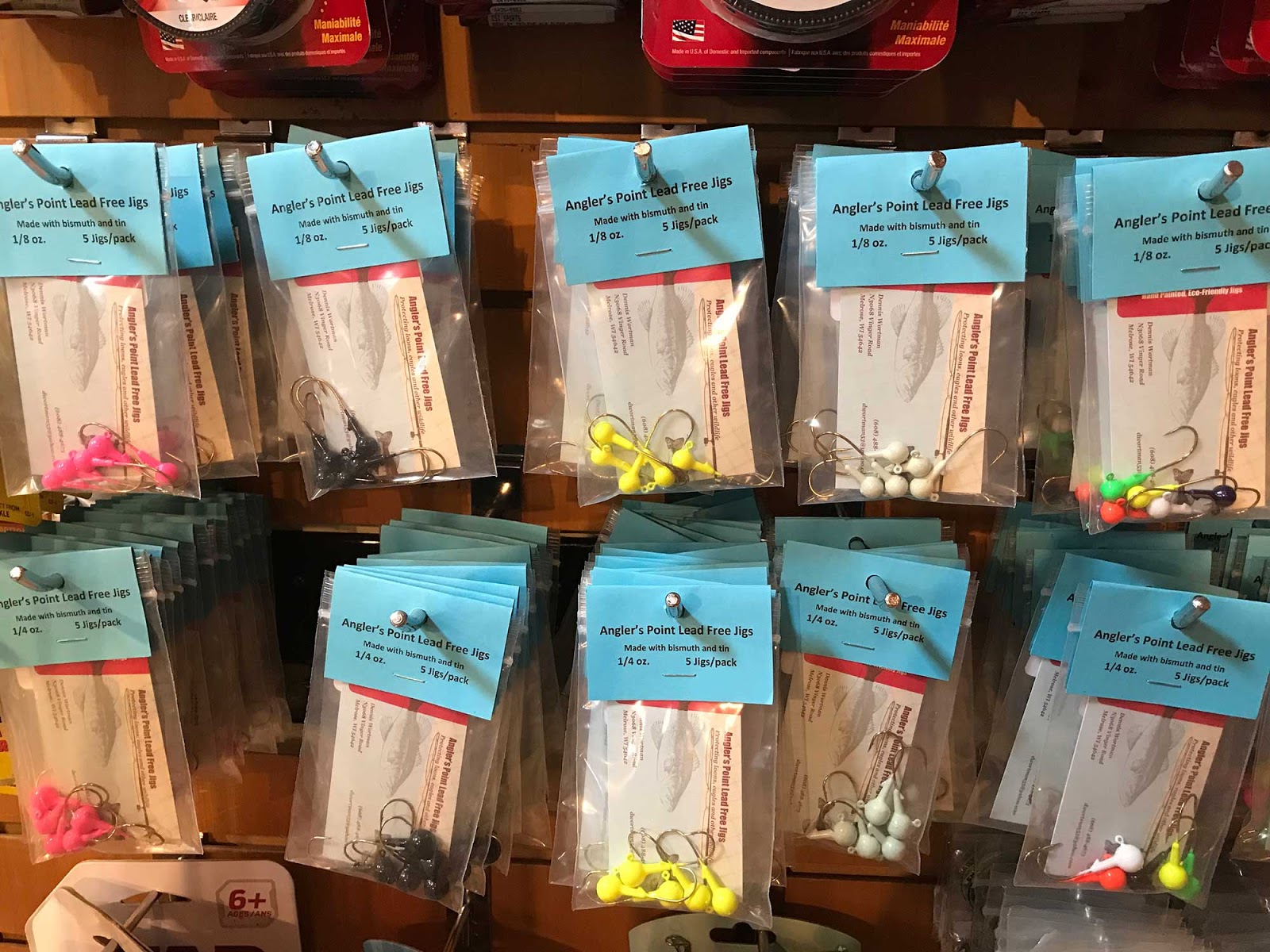


We promote non-lead alternatives in an attempt to promote Loon health.  Our state bird can easily be poisoned by lead jig heads and sinkers, as they often ingest them accidentally, mistaking them for food or rocks.  Tin and Bismuth make a slightly larger but no less effective jig.

Color choices can get you into many a long conversation with older more experienced anglers and those who are just superstitious, or rely on a favorite.  We have a variety of water colors in the Boundary Waters lakes, from crystal clear to dark and tannin stained.  It pays to have a variety of colors in your tackle box.  Many people would never try darker colors, however I’ve personally proven to myself that fish must see darker colors differently than we do because black, dark blue, red have performed well for me even in darker waters.  Traditional choices are yellow, chartreuse, pink, white or glow and orange.


The ideal choices to bait your jig hooks with are leeches, minnows and nightcrawlers.  However, live bait is increasingly difficult to keep alive during wilderness trips that extend past a couple of days or if the weather is warm such as it is in the later weeks of July and much of August. There are a number of artificial and plastic baits that mimic the visual and swimming performance of minnows, leeches and worms.  There’s even a company called of all things, Magic®, that package preserved Emerald Shiners.  These shiners are traditionally a favorite bait on some Minnesota lakes where for years and years anglers have used frozen shiners that they preserved. These preserved minnows have an anise scent to them.  Jigging up and down tipped with an Emerald Shiner seems to some to indeed be Magic.


It’s hard to beat a twister tail on the end of a jig.  White, green or black seem to do an excellent job of exciting fish and mimicking minnows, leeches and worms.


Jigs have the downfall by nature of not being weedless and hanging up on rock piles and getting stuck.  That’s why it always makes sense to take along more than you think you’ll need.  It makes sense to give yourself color options and even take along some different sized jigs in case the wind comes up (the Walleye Chop isn’t famous for no reason… they like the wind, they despise direct sunlight (look at their eyes — wouldn’t you) and they also like fast moving water (fishing the tail end of rapids often produces).  Tiny jigs and bits of Twisty Tails or colored fluff are excellent baits for crappie, trout and panfish.

I have to confess that I really enjoy bobber fishing and often I’ll employ a jig at the line underneath my bobber and just let my patience drift.  There’s nothing quite like watching that red and white ball go under, and then go deeper.  Wham!!! Dinner!

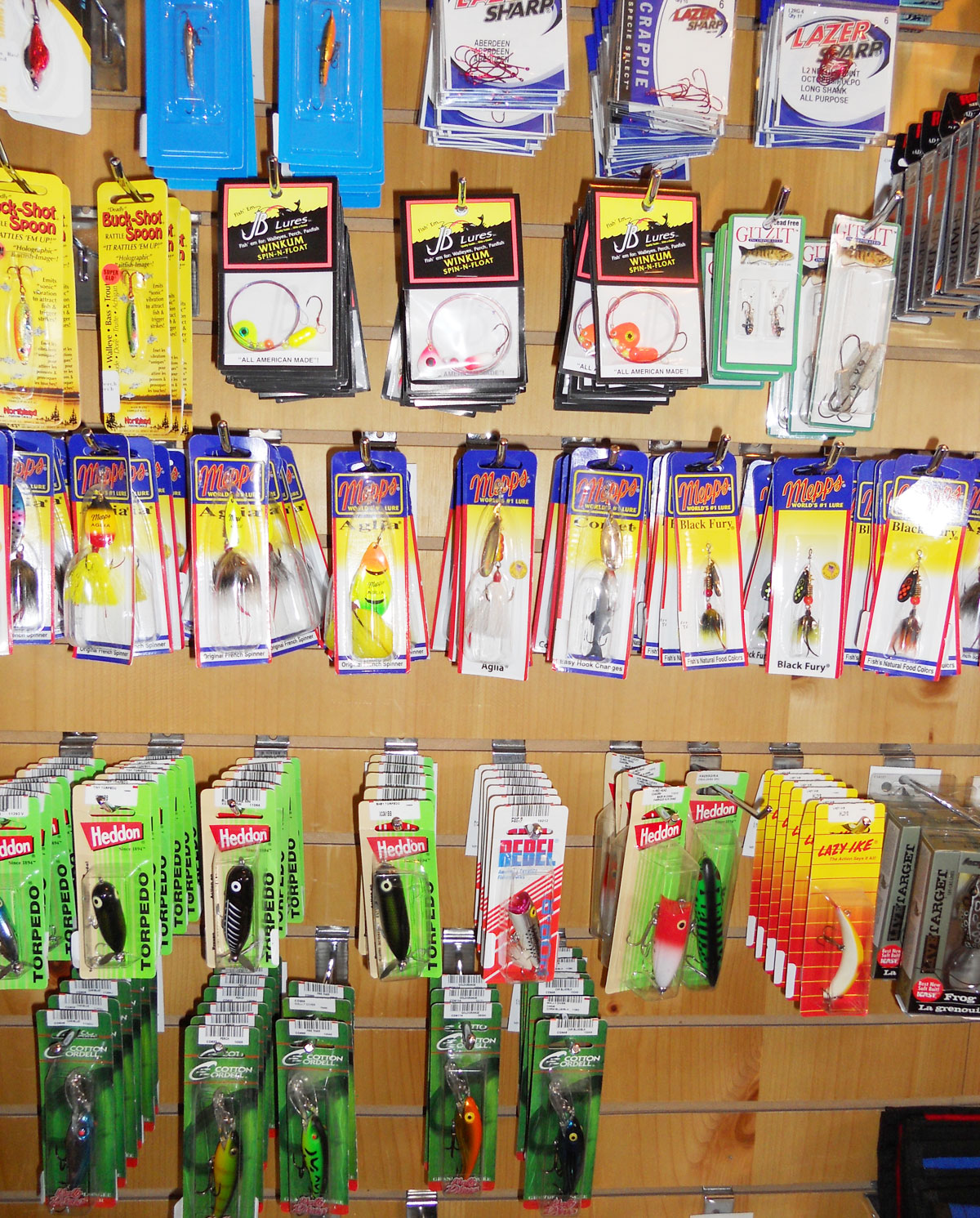
Just a side note because sometimes you want options.  When I first moved to Minnesota I came across a rig called a Winkum Spin-N-Float.  There’s a little float and a spinner attached to the same leader line as the perfect sized simple Walleye hook.  Where this rig attached to your line you attach either a sliding weight or a few of Water Gremlin Lead Alternative Sinkers.  You bait the hook with a nightcrawler or your preference and the float keeps it up off the bottom while the spinner attracts attention.  Toss is out from your campsite and leave it sit while you wait for the end of your rod to bend down!  When I’m not jigging or casting a countdown Rapala® or Mepps® spinner, I’m using one of these.


Once again, my fishing choices revolve around simple, classic choices that can appeal to a variety of species and produce time-honored results.  Walleyes in Minnesota seem to bite on vertical ball head jigs more than just about anything else.  If you don’t include Mister Twister® Tails in your pack, you should.

As one of the anglers, Mark, who replied to my last fishing blog said, “I usually paddle into the wind on a lake, and then toss one of my white twisters out and drift with the wind across the lake and usually have caught at least one northern or walleye using this method.”  You see what I mean, jigs are versatile and adaptable.  They allow you to develop your own style and catch fish the way you are most comfortable.

Thursday, May 17, 2018

Boundary Waters Fishing: Go To Lures by Tim Stouffer

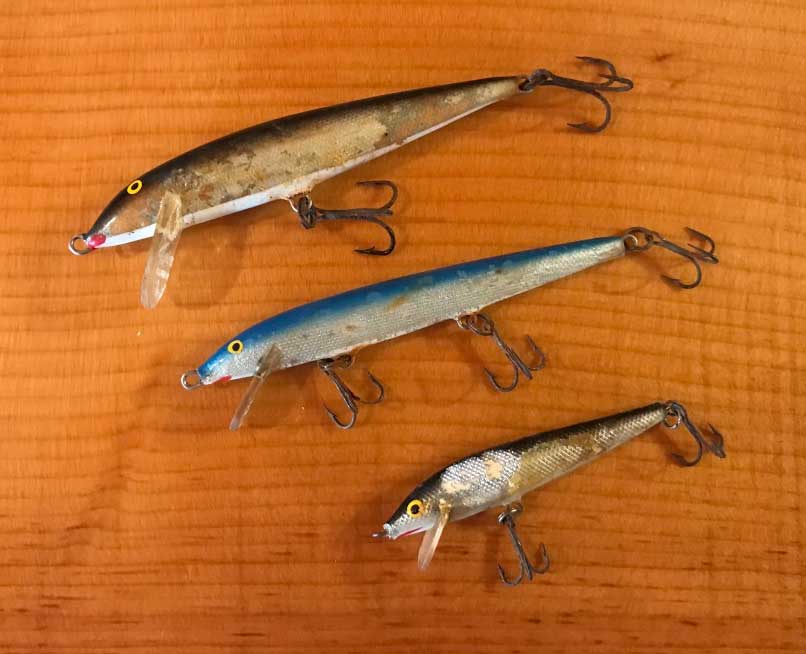
I often find Original Floating® Rapalas® in various conditions in the bottom of old tackle boxes that I buy.  Since I was a little kid, one of my passions has been antiques.  I gravitate towards old tackle boxes and (avoiding rusty hooks) love to dig through them looking for treasure.  Aside from remnants of melted plastic worms, the single most popular discovery is some form of lightweight balsa Rapala® Floating Minnow.  Sometimes this will include foil-sided early models with embossed stars from when they were still made in Finland.


This got me to thinking… why do I find so many of these?  Why are they always in such a state of disrepair and not pristine?  Why do their newer counterparts show up nearly as often in Perch, Silver and Blue, Firetiger and Orange?  And, perhaps an even better question, what do I consider my “Go To” lure when on a Boundary Waters Canoe Trip?  Not necessarily my favorite lure, because if I’m perfectly honest Mepps® Spinners are my favorite because they were my Dad’s favorite and who doesn’t enjoy a bit of flash?  Usually walleye, definitely Pike and the Smallmouth love em.  Let’s face it though, they aren’t minnow shaped, don’t swim or look like a minnow except in the heat of the moment.


Most predators are attracted to anything that closely mimics their natural prey.  Wounded or erratically swimming minnows.  Or, when wounded ones aren’t on your radar, something that looks like what you’d expect to be swimming in the water.

Live bait is difficult to keep alive during the Summer months when the temperatures rise.  It’s hard to transport and care for even when it is cooler outside.  Most of us use artificial baits on extended trips longer than a couple of days.  Most anglers have favorite colors and like to change it up according to the season.  I prefer perch colors early and late in the year and will switch them out for Firetiger and Silver and Blue and crawdad brown and orange imitators during the heat of July and August.

Whether or not I’m going up to Quetico Park in Canada where barbless hooks are a requirement, I always pinch the barbs of my hooks off.  Often on a Rapala® that means crimping down 9 hooks for the three trebles, at least six, depending upon the model.  Fish tend to flip and writhe at the exact moment you are reaching into the net or for their mouths.  At that point you are in danger of embedding multiple hooks into your hand or arm and believe me you don’t want that to happen.  You especially don’t want those hooks to have barbs on them when they are driven deep into your thumb.

From the beginning Rapala® has tank tested and tuned by hand each of the lures that they produce.  This is how you know that every model you pull of a new box or old tackle box will accurately mimic the action of baitfish.  There are many different models available and I plan on highlighting a few of our favorites that produce well in the Boundary Waters.  You can plan your wilderness tackle box accordingly and tweak what you take along in your canoe to your taste.


Shallow Fishing for Northern Pike, Walleye, Bass and Trout is an ideal beginning to the season.  For this the Original Floating® Minnow is very hard to beat.  Fish where you know baitfish will be: in warmer waters, near new weed growth just underneath, casting near structure like downed trees and shallow rocks.  Add weight like a pinch on sinker of some sort (we recommend non-lead alternatives because lead poisons Loons and other wildlife) perhaps a foot above your Original Floating® Minnow and you’ve just extended the season and reason for this lure.  Now you can troll at mid-depth with it.


If you like to hunt for large fish, you can use Husky Magnum® or Floating Magnum® Rapalas both as floating surface models as the Lilly Pads and grasses grow out of the water or off of a “bottom bouncer” a weighted wire that bounces off the bottom and allows you to fish large lures way down deep.  This is a classic up north way to troll deeper waters but requires heavier rods, reels, line and leaders.  The point is, as you are starting to imagine, that Rapala® makes a lot of lures, but each one has multiple uses!


While we’re on the subject of Big, one of our Outfitting Crew’s favorite lures is the Deep Tail Dancer®.  Made to head down to the thirty foot range they seem to attract a great deal of attention from Lake Trout and larger fish in particular.  They come in some fantastic color options.  They’re a little bit like an overgrown version of the Fat Rap®, which has also been a favorite of Walleye and Pike for many years.


The CountDown® Rapalas® are the best choice for mid-range depth and they lend themselves to great stop-and-go motion when retrieving.  One of my most successful afternoons of Walleye fishing involved casting medium sized Perch colored CountDown® Raps towards an island and counting to five before I began retrieving it in a steady, fluid motion instead of stop-and-go.  I couldn’t cast it too close to the island because by the time I reached five, it would have sunk to snag in the rocks, but with patience in my pocket by the time I reached another five on the retrieve I had a Walleye on.  Time and time again, the perfect size for dinner, one after another.  Ever since then, especially on a hot day, I’ll go back to the CountDown®.


Anytime during the season when you want to get attention quickly, it’s a good idea to move to the erratic swimming motion of a Jointed Rapala.  Your retrieve and depth choices can modify the display of this magical lure even more.  Wounded Baitfish, wounded baitfish, wounded baitfish.  It should be your mantra, especially when nothing else is working.  If you are paddling steadily towards your first (or next) campsite and you want a lazy way to have the best chance at fresh fish for dinner, the Jointed Rapala is often your best bet.


Around camp, you’ll often find panfish.  Usually that also means there’s Northern Pike, the wolves of the northern waters, cruising for big punkinseed and bluegill (not to mention Black Crappie).  Traditional ways to fish for panfish include slip bobbers and tiny “flu-flu” jigs.  I like to put on a piece of night crawler when I’m near home. People love to fish them with a slip bobber rig and small, silvery “crappie minnows”.  Those traditional methods involve live bait. There’s a relatively new version of the fantastic performing Fat Rap called simply the Mini Fat Rap.  They have a compact, tight swimming action that imitates (nearly perfectly) the speed and motion of a fleeing baitfish.  This causes what seem to be instinctive strikes from panfish that you’d expect from its one and a half inch size.  Again, add a weight six to twelve inches up from it on your line and you can create this action at a deeper level, down by where the bigger ones are hiding in the shadows.

Well, that’s why you find so many Rapalas® in old and new tackle boxes up North.  Down South too, for that matter, but for the Boundary Waters and Canoe Camping Trips, it’s hard to beat a balsa minnow that has been hand tuned to catch fish for dinner.  Breakfast too.

You pick the colors, you pick the style, just get more than one, because even if you don’t lose any, your friends will want to use em.  These lures and/or other Rapala® lures are in-stock at our Retail Store, Piragis Northwoods Company at 105 North Central Avenue in Ely, Minnesota on the edge of the Boundary Waters.

Wednesday, October 19, 2016

Angling in the Boundary Waters by Reid Carron


Fly anglers who are tired of fighting the crowds on the famous streams in the Rockies and on the coasts can find a respite from the competition by coming to the Boundary Waters Canoe Area Wilderness.  More than a thousand Wilderness lakes (and others in the Superior National Forest outside the Boundary Waters) present great opportunities to catch smallmouth bass and northerns (and the occasional walleye) on flies from the fishing opener in May until late September.  On most lakes on most days, there won’t be another canoe in sight.  Trout anglers accustomed to wading or driftboat fishing will need to adjust their casting strokes a bit to compensate for fishing from a canoe seat, but as a fly fishing fanatic who is not a stellar caster I can attest that the transition is not difficult.  Casting poppers, streamers, and crayfish imitations for our big “warmwater” game fish is less technical than stream trout fishing but no less rewarding.


Take two rods to maximize the opportunities and the fun.  I prefer a five-weight rod for smallmouth (and sometimes largemouth) bass. With a weight-forward floating line and a tapered monofilament bass bug leader, it’s easy to cast poppers and small streamers accurately to the nooks and crannies where bass wait for prey.  An eight-weight with a streamer taper weight-forward line and a heavy monofilament leader with a wire tippet is the right rig for northerns. The only fly you need for northerns (and walleyes) is a 2/0 chartreuse or chartreuse and white Clouser.  A northern will come a long way for the Clouser. The tricky part is that northerns often can’t resist a bass bug or a smaller streamer, which I fish without a wire tippet on the five-weight rod because wire deadens the action of smaller flies.  The northerns fail to ask which rod you are using before they hit.  Be prepared to lose some bass flies. 


But you don’t need to be a fly angler to enjoy fishing in the Boundary Waters.  My good friend Steve Piragis prefers spincasting Rapalas or spoons--or sometimes fishing leeches for walleyes for the pan.  Steve is a wonderful stern-seat paddler, and he keeps me in position for fly casting while fishing very effectively himself.  It’s a great combination.  Come to Ely with your fly rod or whatever rod-and-reel combo you prefer.  You will have a fun fishing adventure in the world’s greatest canoe country.


Photo credits Ben Carron, Reid Carron, and Steve Piragis.

Friday, October 9, 2015

Fall Comes to the Northland


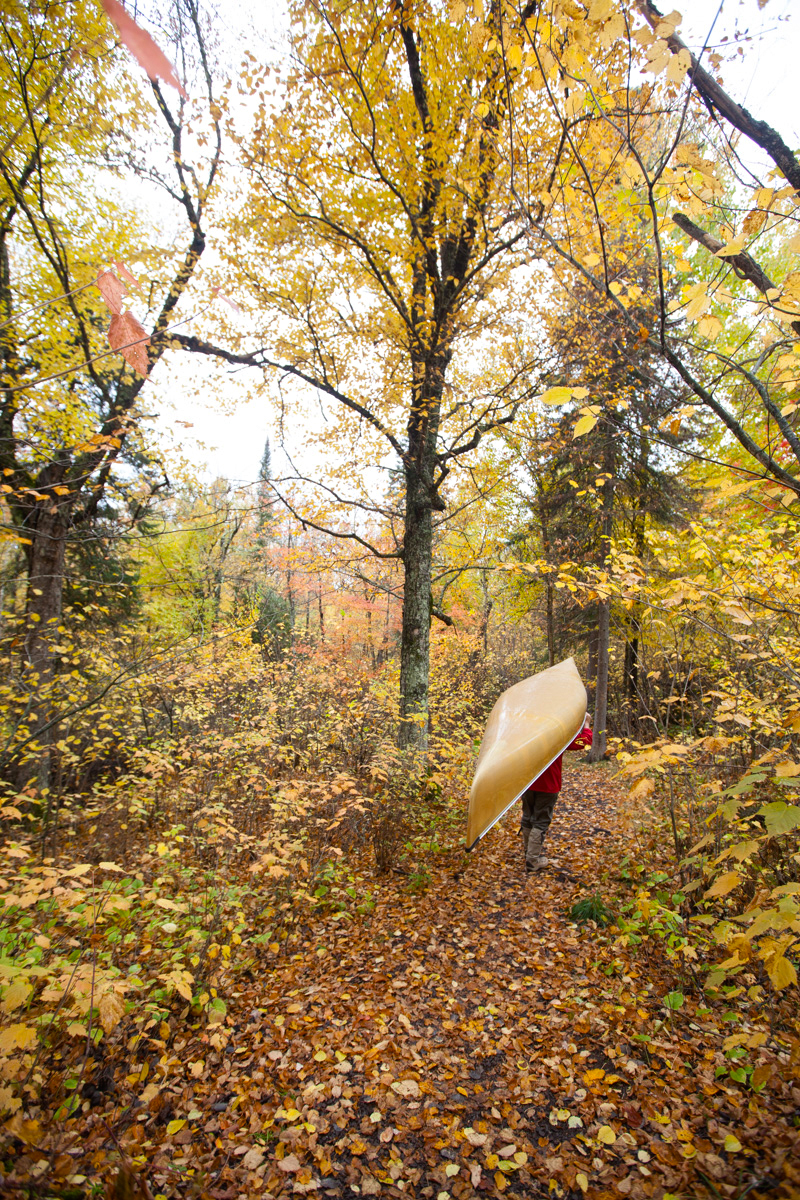
Yesterday, Steve Piragis and I took a walk along a portage near Ely.  After a day and night of rain, our leaves that had really just begun to deepen in color were falling all around us.  Autumn here in the Northwoods is fickle and comes on fast.  It has no patience for those of us who love it so much and no desire to every hang around as much as we'd like it to.

So, when you have some time, or not, (it is always best to make time) It pays to get outside and relish the oranges, yellows, browns, magentas, reds against the backdrop of green conifers and blue sky.  The yellow in this kevlar Wenonah Spirit II made a cool focal point.

I'm really just along for the ride, but the Piragis Pants and Chota Breathable Waterproof Socks aren't.  They are the real deal and when paired with Chota Caney Fork Portage Boots or Quetico Trekkers, they make perfect sense for your feet during cool water times such right now.  With 5 nights complete with frost already, the waters are fresh with anticipation of being hard in a month and a half if not sooner.  The fish instinctively know this and they are hungry.  The bite is on!

If the beautiful colors aren't enough to entice you into a trip to Ely and the Boundary Waters this Autumn, that should.  Nothing like a fresh fish dinner over the campfire.

Oh, and just because Minnesota is full of surprises, on Sunday, it is supposed to be 76 degrees here in Ely.  Sunshine will never feel so great.

p.s. The next two weekends represent the end of our Outlet Store Season for 2015.  That means less than eight days left for you to save 75% on excellent clothing items in our Outlet Store.  Sale ends when MEA Weekend is over.

The walk in the woods yesterday inspired this poem.

North Country Fall

Leaves are falling,
circling round in their descent
like distant friends might
one day plot a pilgrimage
towards freedom.
Bigtooth Aspens, White Swamp Oaks,
Showy Mountain Ash
Popples and Paper Birches,
Silver Maple; Black Ash,
Pin Cherry, Quaking Aspens
and underneath, Ironwood, Honeysuckle and Anise Hyssop.
Eastern Cottonwoods, Box Elders.
Sugar Maples and a
solitary
Shagbark Hickory, the ugly duckling
amongst a temeritous stand
of Bur Oak.

While the tamarack turn
their backs on their green
coniferous neighbors.
Leafy fingers,
Golden with rust, reach
for the clouds as if 
to pull down the 
snow around their
knobby knees,
before falling selfishly.
Alone, leafless, among all the other
conifers of the North.

Strong smells of woodsmoke
are in the air
and under the raven’s
wing.  Apples burgeon
with Summer’s amorous liquor, heavy
on brown branches that
once blossomed
at the mercy of the same 
visiting winds signaling
the separation of Spring.

Lying on the forest floor
I think of you and how far
and fast I’ve fallen.
In the face of your
fortunate
landing.

@Timothy James Stouffer, 10/09/2015
All Rights Reserved


Wednesday, May 22, 2013

Boundary Waters Fishing Gear List by Piragis Northwoods Company

Boundary Waters Fishing Gear List

We get asked all the time what our choices for fishing trips in the Boundary Waters are. While what goes in a guy's or gal's tackle box can be very personal and lures are highly prized for sentimental and experiential reasons… there are tried and true options that have advantages over others.

There are a "big three" of fish species in the Boundary Waters, four if you include Lake Trout, although they are not as prevalent. Walleye, Northern Pike and Smallmouth Bass can be found throughout the Boundary Waters (BWCA). Panfish such as Black Crappie and Bluegill are common as well. We'll focus on the "big three" for the purpose of this discussion. Please note: All of the items discussed can be purchased in our retail store at the first stoplight in Ely, Minnesota before your trip begins. At Piragis, we don't run out, we keep these staples in stock, in the best color and size combinations.

The first thing you need is a good Medium 2 piece spinning rod and one for back-up. If you want to go with a slightly heavier action on the back-up rod, that is fine. Extra line, pre-spooled is a good idea. The best choice for the BWCA is 8 pound test. We advise you take something 6 to 10 lb. test, nothing lighter unless your passion is ultra-light fishing and then you'll have to adjust a great many of the lure choices that follow accordingly.  We carry an excellent and quite affordable break down pack rod and a case made right here in Ely that fits each piece and rolls up to protect it in your pack. That little detail can allow you to have a rod in your pack without hardly noticing it.

Smallmouth Bass and Northern Pike like surface lures. Frog baits, Mouse baits and floating Rapalas always top these lists. Old standards such as Lucky 13, Tiny Torpedo, Bass-Oreno and the newer Pop-R baits all pull Smallies out of their hiding places. Smallmouth Bass like the durable plastic baits such as Zulus and Zooms and others that mimic dying minnows. These are best rigged simply with a large "worm" hook and retrieved like a wounded minnow would swim.


Crank Baits come in various combinations of diving depth. Rapala has shallow and deep runners, ranging from baits that run three to nine feet deep. These are all good and work while you cast or troll for dinner as you paddle through paradise. Shad Raps, Rattletraps and lures like Crawfish Baits and the Wally Diver are fantastic choices to attract Walleyes. It is a good idea to have a combination of all of these to choose from. Tiny alternatives like countdowns and large and jointed Rapalas give you some great options during the heat of Summer.


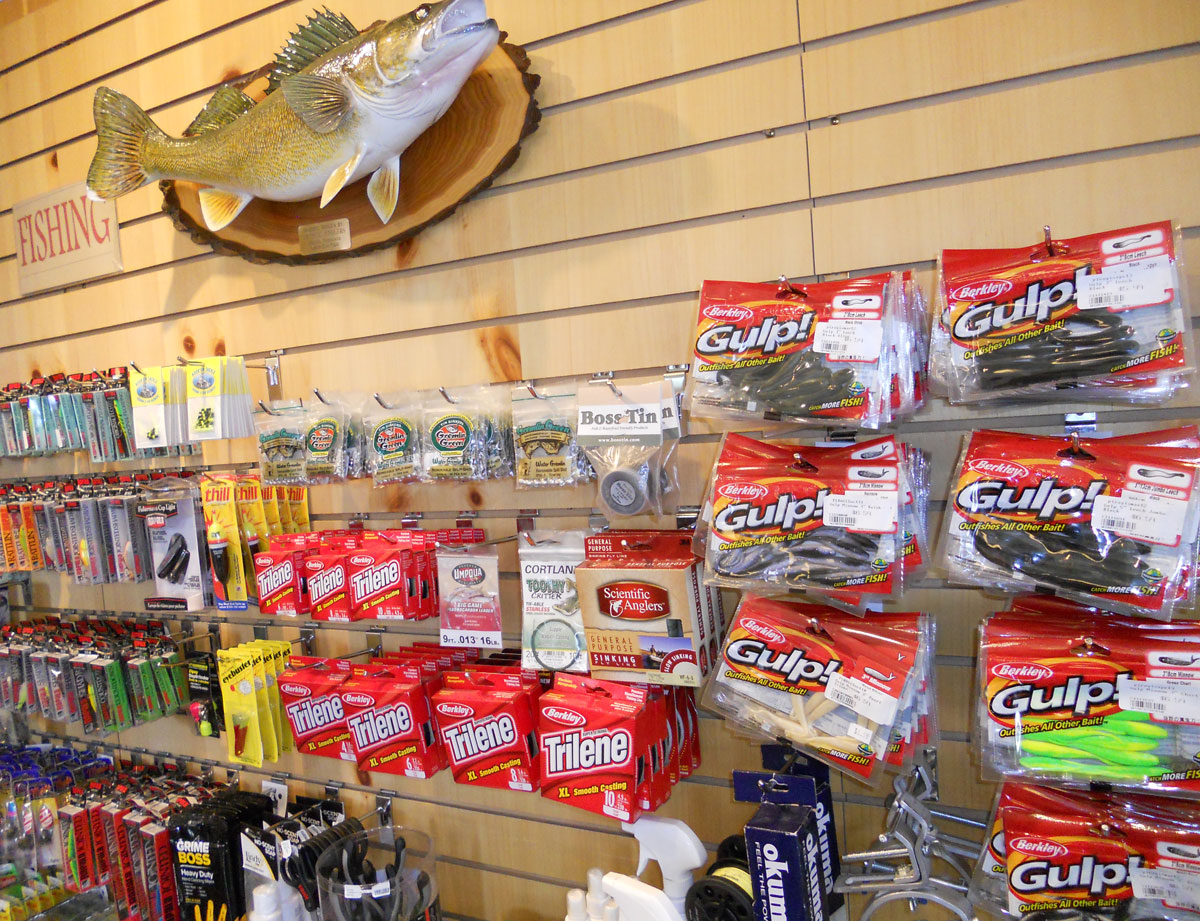
We stock and carry non-lead jig heads in 1/8 oz and 1/4 oz in a variety of highly visible colors. These work great with live bait (minnows, leaches, night crawlers) as well as Gulp artificial versions of those three. Jigs work well with Twister Tails in bright colors and black as well. Those combinations are some favorites of Walleyes in the Northwoods.

Daredevle Spoons in silver, gold and the old standby, red and white are hard to beat when you want to troll deeper with some flash. Fish just respond to them and always have, especially big fish.


Mepps Spinners in just about any size seem to attract fish on days when nothing else will work. That being said, they were always my Dad's favorite lure and he used them almost exclusively. Mepps with bucktails for trailers bring big pike in too!

There's a handful of terminal tackle and tools that you should have in your tackle box or pack. That brings to mind what you are going to carry all of this stuff in. Flat Plano boxes work well and fit in stowaway packs under the canoe seat or hang from the thwarts. Some soft tackle carriers fit in portage packs easily. Taking your fully outfitted (and often large) favorite tackle box isn't recommended.

Terminal tackle needs include: non-lead sinkers, slip bobbers and stops, plain shaft or octopus hooks (sizes 6 and 4), leaders (stainless or black metal), snaps and swivels.

Extra line is good to have as we've already noted. A good pair of needle nose pliers, a stringer, a net (collapsible) and a sharpened filet knife round out your list of necessary Tools.

As a postscript I always take along a favorite lure for walleye fishing off the campsite. This is a killer lure, that is really just a hook, spinner and float. Made by JB LURES it is the little known, but highly effective WINKUM Spin-N-Float. Just tie on a swivel and snap to the end of your line, put a heavier split shot for weight before the swivel, slip the loop on this rig onto your snap and rig a minnow, leech, worm, gulp artificial bait or twisty tail on the #4 octopus hook and you are ready for action. Upon casting it out, the weight sinks, the float raises your bait up off the ground and the spinner flashes around like a one-eyed wounded bait fish. You'll have time to feel your line being taken and see the end of your rod being yanked down before you set the hook!

NOTE ON COLORS and PRESENTATION Popular color combinations are chartreuse, pink, clown, perch and firetiger along with blue and silver shad. Black is a surprisingly effective color for jigs and plastics as well. As always, the most natural presentation you can rig will always bring the best results. Simple knots on a plain hook with a worm and a split shot a foot or two up will produce fish without being fancy when you fish off of the bottom. Tie your artificial baits on to "swim" naturally and retrieve them as such and you will do better. Look for sunken trees, rocks and structure when fishing for bass and weed beds for pike. Walleyes like points and structure transitions on the lake bottoms most.

Lure Lock'r. Keep those hooks from snagging and keep your favorite lure ready to go on your rod without tangling.  Don't leave home without them!  Lure Lock'rs Here.

RODS and REELS. We sell a great and affordable (less than $35 for rod and reel) combination from Okuma called the Finchaser Combo here at Piragis in Ely. If you want to leave your expensive rod at home because you don't want to chance a snap in the wilderness with portages, trees and snags, you can't do much better than these rods and they'll be a step (way up) for the kids or company to use when you get home.

Why Non-Lead? Common Loons gobble up lead jigs, sinkers and split shot and as a result die from lead poisoning. We are committed to keeping our State Birds happy and healthy.


Fishing with Kids: Read this Blog Post specifically written about fishing with kids 

Tim Stouffer


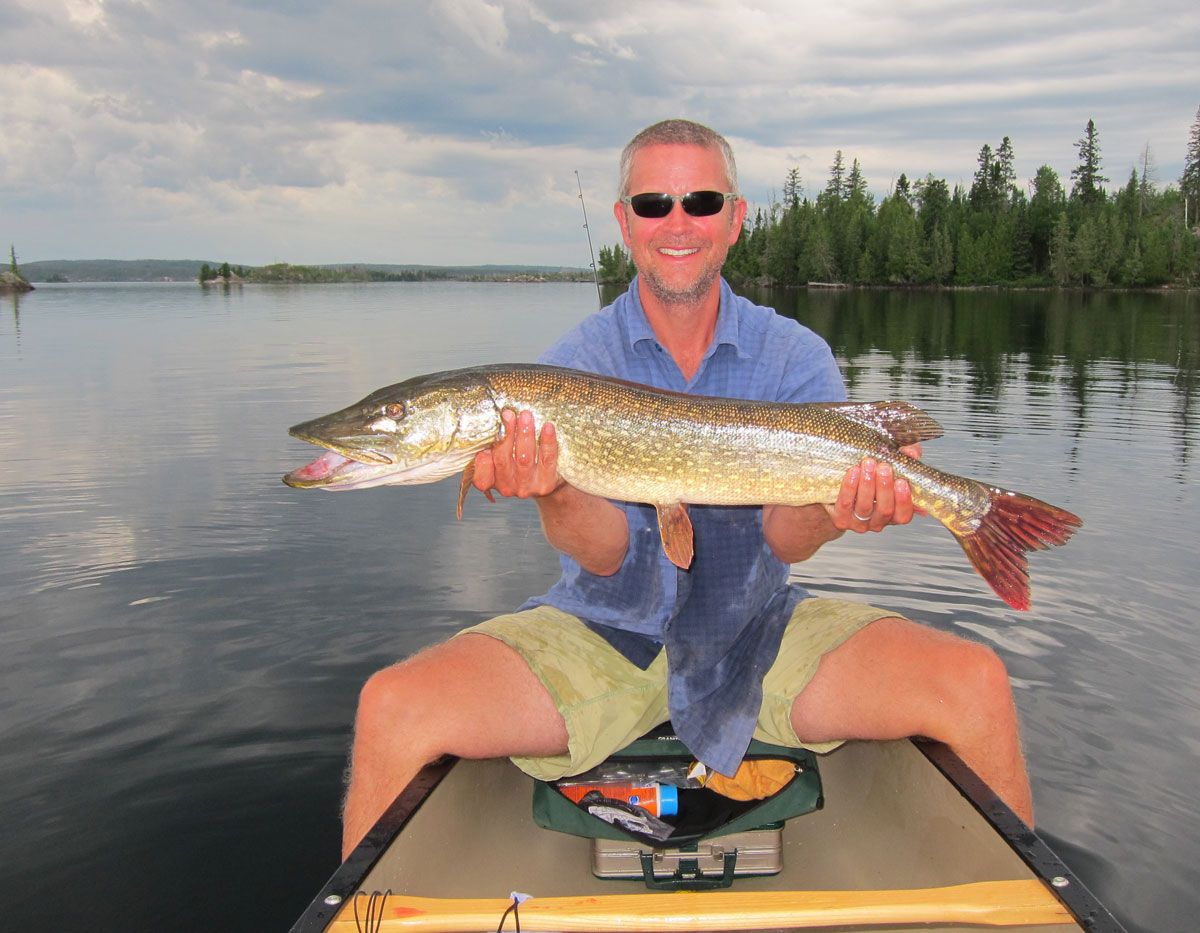
One of our Canoe Trip Clients submitted this photo of a Boundary Waters Northern Pike

Followers