Sunday, March 30, 2014

BLOG 66. It's here! A Lightweight, Totally Breathable Wind Anorak


BLOG 66. IT'S HERE! A LIGHTWEIGHT, TOTALLY BREATHABLE WIND ANORAK
by
Cliff Jacobson

In February of this year, friends and I canoed 130 miles across the Everglades. It took us eleven days.  During that time, we had a 25 mph head-wind that never stopped. A wind like this would be a stopper in the BWCA, but because the Glades are so shallow, waves never got much over a foot high. But the temperature never warmed to T-shirt weather either. I don’t know what we would have done without our wind jackets.

I can’t imagine going on a canoe trip without a wind-shell. I wear one every day over a wool T-shirt, long johns or layered clothing. When it becomes groady, I just swish it in the lake, wring it out and spread it on a pack to dry.

But highly porous wind-shells have largely gone the way of the passenger pigeon. Everyone must now have Gore-tex in the belief that “waterproof AND breathable” are a good thing. They are if it’s raining. They’re not if it’s not. Here’s why: Canoeing is hard work. The pores in Gore-tex are just too small to rapidly remove large amounts of moisture (sweat) when you’re working hard. The choice is to take off the jacket and get cold, or keep it on and enjoy a sauna. Unless you can open the neck and cuffs and unzip the under-arms, there is no middle ground.

A totally breathable jacket is what you want—one that doesn’t have ANY waterproofing.  But just try to find one. After hours of searching the web, I discovered just two (L.L. Bean and Outward Bound) that “marginally” qualify. “Marginal”, because while these jackets lack a dedicated waterproof coating, they have been chemically treated to repel water for quite a long time. I tried to remove the chemical treatment with repeated washings (six times!) in hot water. No go. I had the jackets dry-cleaned. Nope. Surely, the chemist who developed this water-repellent treatment is pleased. I’m not. The jackets are too hot to wear when I’m working even moderately hard. Three decades ago there were scores of highly porous wind-shells. But they are gone now because newbies evidently fear that a drop of water could pass through the fabric and God-forbid, get on their skin! Or maybe they think that one garment for wind and rain is a good idea. Yeah, like using the same canoe for whitewater slalom and flat-water racing!
 
The new Piragis wind-shell


That’s the bad news.  Now for the good. For three years now, Steve Piragis and I have been working to develop a better wind-shell. We envisioned a conventional over-the-head design with three pockets (two through-the-body slash pockets and a zippered kangaroo pocket—just like the old models. The chosen fabric (lightweight nylon) would be strong, lightweight and quiet in the bush, and it would have a silky soft, draping feel.  The jacket would be cut very full in the body and sleeves—to make room for layering. Zippers would be substantial. The vertical zipper would run high up the neck so drafts could be sealed without having to tighten the hood cords to gather material. Quick-draft sealing is important when you’re fighting wind and can’t put down your paddle to adjust your clothes. 

Piragis has offered a wind anorak like this for two years now, but it wasn’t perfect so I never blogged about it. This new model—available in spring 2014 (like right now!) is. The fabric is right—soft and quiet, the zippers are right (not too small or too large), the pockets are right, the hood is right. And the lobster-red color is totally right. I’m excited that we finally got it ALL right. Admittedly, I had a selfish motive for pestering Piragis to develop this old-fashioned wind-shell. My ancient L.L. Bean model had worn thin; the zippers were shot and I couldn’t find a suitable replacement. Now I have one. And so can you. This new Piragis model is much better than the old. It is lightweight and compact enough to fit in a cargo pants pocket; it can be easily washed and dried in the field; it defies wind, and it looks real good. I love it!

Cliff Jacobson
www.cliff-jacobson.com

Wednesday, March 19, 2014

Trip Planning: Where to Start?


Planning any kind of vacation comes with a lot of questions.  What kind of weather should I be prepared for?  How do I get to my destination? Where is a good place to stay—to eat?  What are some sights I need to see?  Planning a backcountry trip, specifically a Boundary Waters trip, is no different—it comes with its own tome of information to uncover.  So, where to start?

Every Boundary Waters trip begins the same way.  It all starts with the desire to rejuvenate and refresh ourselves—the desire to remove ourselves from our daily routines.  For some, this might be a fishing trip, others might just want to get back to the basics, some might be explorers, or naturalists, or maybe some are looking for quality bonding time with friends and family in a beautiful, natural wilderness area.  No matter how you choose to experience the BWCA, it begins with securing a permit.

The BWCA has many different entry points.  Each entry point allows a limited number of groups to enter at that location each day.  To enter the BWCA, your group needs to obtain a permit that specifies the location and date that you will be entering the wilderness.  Choosing an entry point can seem daunting.  There are so many locations, how do I choose one?  How are the entries different?  Which one will be best for my group?  This is a good time to call us.  We can help you sort through all the details and find the route that best fits your crew.  Here are some questions that we will ask you to consider.  (Don’t worry if you can’t answer all these questions.  We are here to help you.  These are just some items to consider when planning your trip.)

·         What are the dates of your trip?  What time of year were you thinking?
·         What are your goals for the trip?
·         How important is fishing?
·         Do you want to travel every day?
·         What is the group’s experience level?
·         How do you feel about portaging?
·         How many different campsites were you thinking?
·         How hard are you willing to work?  Do you want a relaxing trip?
·         Is there anything in particular you want to see (pictographs, waterfalls, etc.)?
·         How many days is your trip?
·         Are there any kids with you?

Your answers to these questions will help us narrow down your options and find the right trip for you.  There is a lot that goes into planning a canoe trip, but it all starts with the permit.  Give us a call when you are ready to get started.

http://www.piragis.com/outfitting/images/boundarywatersmappiragis.jpg

Thursday, March 13, 2014

BLOG 65. Silly Rules


BLOG 65. SILLY RULES
By Cliff Jacobson


Every national park and wilderness area has some silly rules.  Some apply simple solutions to complex problems.  Others are sound but unworkable because they expect too much or they don’t clarify concerns. And others just don’t make sense at all.  Here are some of my favorites:


1.    Heading the list is the rule to tree your food when bears are around.  This rule applies to every national park and wilderness area, despite the clear fact that bears climb trees.  I’ve addressed this nonsense in blog #8.

2.    This one is from Minnesota’s Boundary Water Canoe Area: “Try to plan your meals so you don’t have left-overs.  If you do, pack them out!” Here’s what happens if you pack out your left-over chili:  By the third day of your canoe trip the chili will be smelling pretty ripe in the July heat. By day five the odor will attract those hungry bears you want to avoid.  If you hoist the chili into a tree at night with your food pack, as recommended by park authorities, the smell will waft much farther.  Best have plenty of pepper spray or a gun on hand!  A better plan is to burn what you can and bury what you can’t!  I think the feds are out-to-lunch on this one.

3.    Here’s another one from the BWCA:  “Food may be packaged in plastic containers that must be packed out with you”.

The rationale is that burning plastic creates hydrocarbons that pollute the environment.  Give me a break: You just drove 200 miles to the BWCA, that’s 400 miles round trip.  Your car gets 30 mpg—it burned 13 gallons of gas. A gallon of gas weighs about six pounds. So, 6 x 13 = 78 pounds of hydrocarbons.  Now, see if I got this right: it’s okay to burn 78 pounds of hydrocarbons in your car but it’s not okay to burn a plastic bag that weighs less than an ounce.  I might add that those empty plastic food bags that will fill your garbage bag contain small amounts of powdered food which, when they absorb moisture, will begin to degrade and smell.  Dinner is served: call in the critters!  It’s safer and wiser to burn plastic bags in your campfire.  Sorry, feds, I don’t buy this one either.


4.    Again from the BWCA:  “Bathe and wash dishes at least 150 feet from lakes and streams”.

Good rule, really.  But 150 feet?  C’mon now, novice campers may get lost in the woods if they wander that far from camp! Besides, the forest service sponsored video, “Leave no trace” shows people washing dishes in camp, not deep in the bush.  I’d re-write the rule to read: “Wash dishes well away from the lake or river.” And I’d leave it at that.

5.    BWCA rule: “If you build a fire, burn only dead wood found lying on the ground.  And, “wood easily broken by hand or cut with a small folding saw eliminates the need for an axe.”
Give me a break! There's plenty of big, downed wood in the BWCA and Quetico. Nobody makes "little stick" fires, not even the Feds!
I’ve canoed all over Canada and parts of Alaska and I can honestly say that the hardest place to make a campfire is in the Boundary Waters. Why?  Because all the good wood has been picked over! To make a reliable blaze one often has to search the woods for a dead downed tree, saw off a limb and split it to get at the dry heartwood.  A Swiss army knife won’t cut it!  An ax will!  Yes, you can make fire in rain with a little folding saw and jack knife, if you know exactly what you’re doing! Most people don’t, so they choke the fire-grate with green cedar boughs and birch bark and hope for the best. Caring campers will later clean out the mess.  Better to bring a full-frame saw and hand-axe and to use the two-handed, SAFE wood- splitting procedure outlined in my books.  That way, you can make a cheery blaze in any weather.

7.    BWCA RULE: “It’s illegal to cut live vegetation for any reason.”
 
There is no trail maintenance in Canada. We "opened up" this portage along the MacFarland River in Saskatchewan. I think we cut about 1000 trees!
This is a good rule but it doesn’t address an important safety issue. Scenario: The wind is howling and the waves are running wild when you pull into the only unoccupied campsite on the lake. There’s a small clearing, enough for two tents, that’s all. The rest of the site is tightly wooded and rocky.  Overhead, the trees sway violently with the wind. A small, live tree (widow-maker) with a wind-split bole leans precariously over the tent-spot; a strong wind could send it crashing down on you. Should you cut it down?  Yes!  Does the law permit it? No!  I might add that the Forest Service, like other governmental organizations, is strapped for money.  Field maintenance crews, which once dotted the portages, have been reduced. The result is that portage trails and campsites are cleared less often than in the past. You should know that in Crown Land, Canada, there is no trail or campsite maintenance whatsoever. Clearing portages and campsites is up to you—another reason why you should carry the tools to do the job!

8.    “Latrines are not garbage cans and should be used for the intended purpose only”. 

This important rule should be followed by everyone. In the days when wooden “thrones” ruled Boundary Waters campsites, the inside lid of each box was stamped  FOR TOILET USE ONLY. Still, people threw garbage into the hole, thinking a bear wouldn’t look there. Truth is a hungry bear would tear the box apart and dig in the hole to get those left-overs. Education, not legislation would have been a better answer.  I’d change the words to read:  IF YOU WANT TO ATTRACT BEARS, THROW GARBAGE HERE! The FOR TOILET USE ONLY stamp reminds me of a sign that was popular a few decades ago.  It read: “Give a hoot, don’t pollute!”  Tell me, please, how do I do that?  What action do you want me to  take?  Again, education trumps legislation!

9.    Here’s one from the BWCA that hardly anyone follows:  “Dispose of fecal matter (from your dog) 150 feet from water sources, capsites, portages, or deposit in a latrine.”

Granted, it’s no fun to step in dog poo while hiking down a portage trail, but bear, coyote and fox scat is just as bad, and they don’t clean up their mess. Dogs are relatively rare in the Boundary Waters and fortunately, the ones I’ve met have been well-behaved and, like their human masters, are having a good time without hurting anything. So why address a problem that largely doesn’t exist—and make a rule that dog owners won’t follow?

10. Here’s a good rule all should follow:   “Dispose of fish remains well away from shorelines, campsites, trails and portages”.  This rule is well-written, simple, easy to understand and to the point.  Now, if they’d just write ‘em all this way, I would be a happy camper!

11. This is a “recommendation” not a rule: “Other campers will enjoy a more remote experience if your gear is a drab color that blends into the forest”.

Perhaps. But there are important down-sides: Safety heads the list.  If you have to be rescued, a float plane WILL NOT see a green canoe, olive-drab tarp and brown tent.  And if you’re portaging down a little used trail and set your marine green pack off to the side in the bush, you may never find it again. This happened to me on an unrefined portage in Saskatchewan, I lost the portage trail and set down my green Old Town Tripper to go exploring.  It took me more than an hour to find it!  I vowed then that I would never own another green canoe!
 
Bright colors are a safety feature.  And, they add interest to your photos.
A camouflaged camp is hard to see so canoeists who are looking for a campsite will paddle very close to yours to determine if it’s occupied. Color will keep them away.

13.  “Camp on durable ground”.  This applies to Alaska’s Noatak River, which I canoed in 2010.
 
Durable ground is  that green hill 300 yards away. This is a gravel bar along the Noatak River, Alaska
You obtain your permit from the National Park Service, after which you are required to see a “leave-no-trace” film before you begin your trip.  The announcer says to CAMP ON DURABLE GROUND.  The camera pans to a rocky beach about 50 yards from the river.  But a rocky beach IS NOT durable ground. Durable ground is at the top of a hill some 200 yards away. Carrying your canoe up that steep hill will be quite a feat.  Few will do it. The film goes on to show a crew making a campfire on this “durable” beach.  They lay out a plastic tarp then shovel sand and gravel on top. They build their fire over this.  Next morning when the fire is dead and cold, they are shown pouring the ashes into the river. Evidently, they pack the plastic sheet for “fire use” at the next campsite.

How absurd! A gravel beach is not a durable surface. Rains will wash the campfire remains into the river and the beach will flood several times a season. So why the plastic?  Better to toss the cold, burned wood into the river, shovel gravel over the fire place to leave-no-trace and be gone.  Using a plastic tarp under a fire on a surface that floods frequently is among the silliest rules I’ve encountered in my travels. I can’t imagine anyone will do it.

Cliff Jacobson
www.cliff-jacobson.com


Sunday, February 23, 2014

BLOG 64. WATER CONTAINERS FOR THE LONG HAUL


BLOG 64.Water Containers For The Long Haul
by
Cliff Jacobson

I never thought much about long-haul water containers until I started canoeing U.S. rivers.  On my Canadian trips, a liter poly bottle and a folding bucket were enough.  Except on rivers like the Bloodvein (Manitoba) where Giardia is a concern, I never carried a filter or purifier.  Instead, I was careful get my drinking water from clear water sources where contamination was unlikely.

My attitude changed when friends and I began to canoe American rivers.  Here, the choice was to carry our water or purify it.  On desert rivers like the Green, Little Missouri and Rio Grande, we settled the sediment with alum (see Blog #9/Western Water or the 25th Anniversary Ed. of my book, “Camping’s Top Secrets) then purified the effluent.  This procedure worked marvelously.
 
A tablespoon of alum in two gallons of water settles silty water quickly.  Green River,  Utah
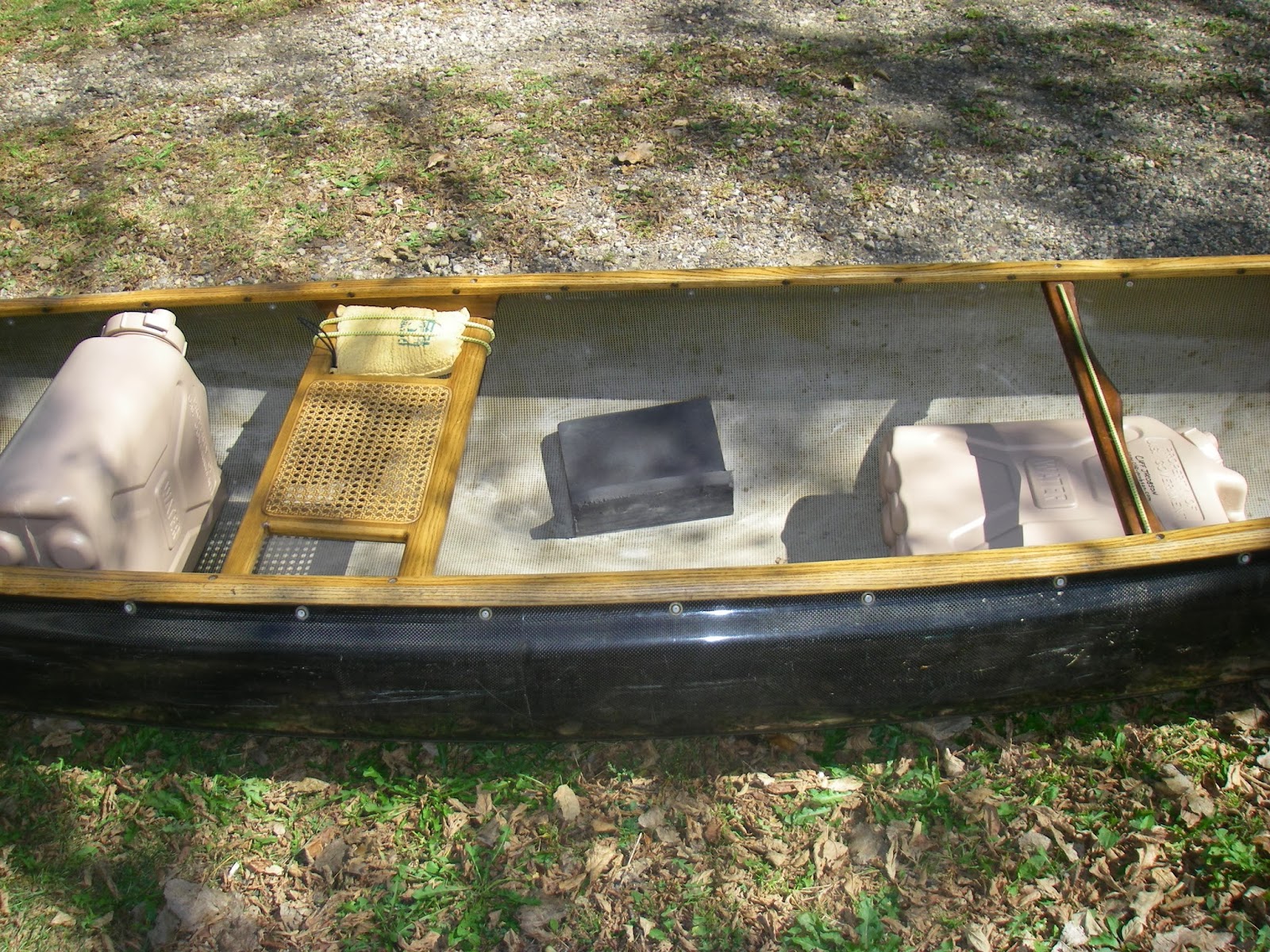
But contaminated and brackish water defies treatment.  Here, you must haul your drinking water—and in the Everglades, you may have to defend it from thirsty raccoons and voracious rats which will bite through plastic containers.  I’m constantly on the prowl for better water jugs.  Here are my requirements:

·      The container must be positively leak-proof.
·      The cap must have a leash to prevent loss.
·      It must fit seamlessly into my Bell Yellowstone solo canoe.  Some otherwise great containers won’t!
·      The handle must be secure and unbreakable.
·      Water is precious—small amounts must pour easily without spilling.
·      The jug must have a wide, quick-fill cap.

SOME FAVORITE WATER CONTAINERS
 
Nalgene bottles are absolutely water-tight, no and's or if's!
NALGENE BOTTLES
For personal use, I’m won over to Nalgene bottles, which come in a variety of sizes and shapes.  I discovered these tough-as-nails poly bottles when I taught high school biology in the mid-1960’s.  Most of the chemicals we used in class came packaged in Nalgene bottles.  The bottles never leaked no matter how rough they were handled.  When the chemicals were gone, I washed out the bottles and  used them on my canoe trips. I still have some 1960’s originals. When Nalge learned that their bottles were popular with outdoors people they responded with new designs and colors. Today, Nalgene bottles have lots of competition but in my opinion they are still the best. 


MSR DROMEDARY BAGS
MSR Dromedary Bag
These beautifully made black fabric bags come in a variety of sizes.  They are lightweight, watertight and tough.  There’s a wide-mouth, quick-fill cap and a small, canteen-style mouthpiece.  A heavy-duty nylon ribbon that runs through grommets along the perimeter provides a handle and options for hanging.  These bags sit low in the canoe and take up little space.  Unlike high, cubical style containers, water doesn’t slosh around as you paddle. This is the bag of choice if you paddle a solo canoe or kayak where space is tight.  If you’re going where sharp-toothed critters will attack soft-sided water bags, you’d best secure them inside stainless steel Outsak bags (http://www.simpleoutdoorstore.com) or Kevlar Ursa sacks (www.ursack.com.)
 
Left: Stainless-steel Outsak bag; right: Kevlar Ursa sack
NRS FIVE (5.3) GALLON WATER JUGS
The NRS 5 gallon jugs appear identical to the combat proven water jugs used by the government and military.  At a bit over 5 pounds empty, these babies are heavy, but unless you purposefully hammer a nail through the side, you’ll never puncture them. And sharp-toothed varmints can’t bite through the thick plastic.  There’s a wide fill and small pour cap The caps are leashed and absolutely secure.  At around 50 dollars apiece, they aren’t cheap, but you’ll be thrilled with the quality and ease-of-use.  Two of these containers will fit in my Bell Yellowstone solo canoe.
Left: NRS 5 gallon (U.S. Govt. spec.) water jug; right: Reliance 2.5 gallon
Two 5 gallon NRS jugs. Bell Yellowstone Solo Canoe


Cliff Jacobson
www.cliff-jacobson.com

Wednesday, February 5, 2014

BLOG 63. Some Advice For Group Leaders


BLOG 63.  SOME ADVICE FOR GROUP LEADERS
by Cliff Jacobson


A bright summer morning on any river.  A crowd of canoers prepare for a downstream float.  It's 9:30 a.m. and confusion abounds.  "Weren't we supposed to shuttle at 9?" someone asks.  What! You say the shuttle's gone?  I didn't hear any announcement. How'm I gonna get my car to Reedsville landing?"
                                
Between the mix of uncertainty and lack of communication, there is misunderstanding of the day's events.
                
"They say we'll be done by four." 
           
"Better be!  Gotta be home by five.  We shoulda left an hour ago.  Where is Robertson (the leader) anyway?"
                
Finally, the shuttle is done and the pack moves to the water’s edge.  Left behind are soft drink cans, candy wrappers and styrofoam cups.
                
Once on the river, the fun begins.  The kids have their ghetto blasters, and some of the adults have beer. Lots of beer! Invariably, you can get one for the asking.  
                                 
Round the bend is an easy rapid, but for the drinkers it's already a four beer day.  Suddenly, there's a capsize.  Everyone is quickly rescued—but wait.  "Where's the beer?  You mean we lost the whole case? 
                                 
A noon lunch is planned, but the undulating mass doesn't reach the appointed spot till two. When the drag canoe finally arrives, the lead boat has already left. The paddlers build a hasty fire, wolf down some charred weiners then beat a hasty retreat back to the canoe. On the run, they kick sand over the determined flames. Is the fire out?  Who knows? They never looked back!
    
           
Around three o'clock, a persistent head wind develops and the canoes spread out further.  The gap widens as those in pusher aluminum and Royalex canoes fall behind.  With knowing smiles, Robertson takes the lead in his quick Kevlar cruiser. "We'll teach you slugs what "efficient" canoeing is all about!
                
The lead canoes reach the take out at 4:06, as planned.  Two hours later the last boats arrive.  Sorry guys, the last car's been shuttled. 
                
You’re probably thinking: "good story, Cliff, considering you made it up." But I didn't.  Not one word. I have, however, changed the names to protect the guilty. 
                
Environmental neglect is more often a matter of insensitivity than illegality.  Since the group "leader" is the one who sets the tone, let's discuss him or her first.

The leader:  The problem is, most groups don't have one. Too often, the one who plays the part is inexperienced and disorganized.  Show me a group with a good leader and I'll show you ethical behavior on the river.
                
Here are the tenets of good leaderhsip:
                
1.    The leader leads.  No one passes the leader.  Ever!
2.    The most experienced canoeist (next to the leader) paddles "drag".  The drag canoe never passes anyone. Rest stops are timed from the arrival of the drag--not the lead--canoe. 
3.    The end-of-trip shuttle does not begin until the last canoe touches shore!
4.    Each canoe keeps visual contact with the canoe BEHIND it. Rationale: It's easy to drop back but hard to push ahead and catch a fast team.
5.     Emergency equipment (first-aid kit, fire-starters, etc.) is carried in both lead and drag canoes.  
6.    In a capsize, nearby canoes rescue the swimmers first, canoe and gear second.
7.    The group leader should make the nature of the trip (slow float, fast cruise, whitewater, etc.) clear before the trip. 
8.    Everyone gets a list of essential equipment and "do's and don'ts", in advance of the trip.
          
Here are my expectations:
                
1. No radios, music blasters or cell phone calls.      
             
2. Those who don't have essential items (a PFD, plus appropriate clothing  and rain gear) don’t go.
                
3. Wear your life jacket! This does not mean "have it available”.  Take off your PFD on a well run club outing and you'll hear about it!
               
4. Shuttle: Everyone wants his car at the take-out so he can get home quickly.   Those who volunteer to taxi their friends back to the put-in are greatly appreciated!
                
5. Beer: It's okay to have a beer with lunch, providing you carry out the can.  However, continuous sipping on the river is frowned upon.
                
6. Garbage: You brought it in, you pack it out!  A plastic trash bag tied to to a canoe thwart is a non-intimidating way to educate others.
                
7. Human waste: Bury waste away from water, and burn the toilet paper.  Douse the flames with water. Cover the hole with dirt.  Or, use a sanitary “toilet bag” system (Biffy Bag, Clearwaste, etc.).
                
8. Cruising speed. There is always a fast team who wants to show off and an inexperienced one who lags behind--a scenario that can produce a chain of canoes miles long.  It is impossible to maintain control over a fleet that's spread out.  So, spell out the requirements of the cruise before you set out.  
                
9. Smoking: smokers please smoke away from the crowd.  And, field-strip your cigarettes.
                                 
10. Don't play dodge-'em with your canoe.  If you want to see fur fly, crash into (indeed, just nick!) someone's $2,600 Kevlar canoe with a rental tank. Boy, are you in for a surprise!
                
11. Packing your gear: Everything should be packed in waterproof containers that float. 
                
I could continue, but these are the basic concerns--all of which may be summarized by two simple cliches: "Take only pictures, leave only footprints."  And respect the rights of others. 

XXX


Followers